A high-level workflow for preparing and executing installed-filter scanning without replacing site SOPs. This guide is written for engineers, validation teams, quality professionals, EHS teams and procurement users who need to turn a search for HEPA filter scan test procedure into a technically sound requirement.
Instrument selection should begin with the measurement objective, not a model number. Define what must be measured, where it will be measured, how often the measurement is required, how the result will be documented, and which approved procedure or standard governs the work. Those decisions determine the useful specifications far better than a long feature list.
Understand the installed-filter test objective
Installed HEPA/ULPA integrity work is intended to identify unacceptable leakage through the filter media, frame, seal or installation. A complete test setup commonly involves an aerosol challenge, a measurement instrument and a controlled scanning method. The exact method, acceptance criteria and challenge conditions must come from the applicable standard and approved site procedure.
Equipment and workflow considerations
- Aerosol generation: ensure the generator can create a stable challenge suitable for the system under test.
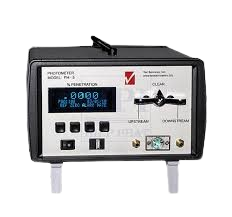
- Photometer or detector: verify measurement range, response, calibration status and compatibility with the chosen method.
- Access and scan geometry: plan upstream introduction and downstream access before testing starts.
- Documentation: capture instrument IDs, calibration status, filter identity, conditions, observations and final disposition.
Implementation checklist
- Write a one-sentence measurement objective.
- List the applicable SOP, protocol, customer requirement or standard.
- Define the required range, flow, accuracy, channels or parameters.
- Document environmental and access constraints.
- Specify data, reporting and integration requirements.
- Confirm calibration, training, service and lifecycle support.
- Run an application review before finalizing the purchase.
Questions to ask before you buy
Should I select an instrument only by price?
No. Compare technical suitability, included accessories, calibration scope, software/data functions, training, warranty, local support and expected lifecycle cost.
Why is application information important in an RFQ?
The same instrument category can be configured for very different tasks. Application details help the supplier recommend the correct range, flow, probe, accessories and documentation package.
How should I validate the final selection?
Review the proposed configuration against your approved requirement and current applicable procedures. For regulated applications, involve the responsible quality or validation team before purchase.